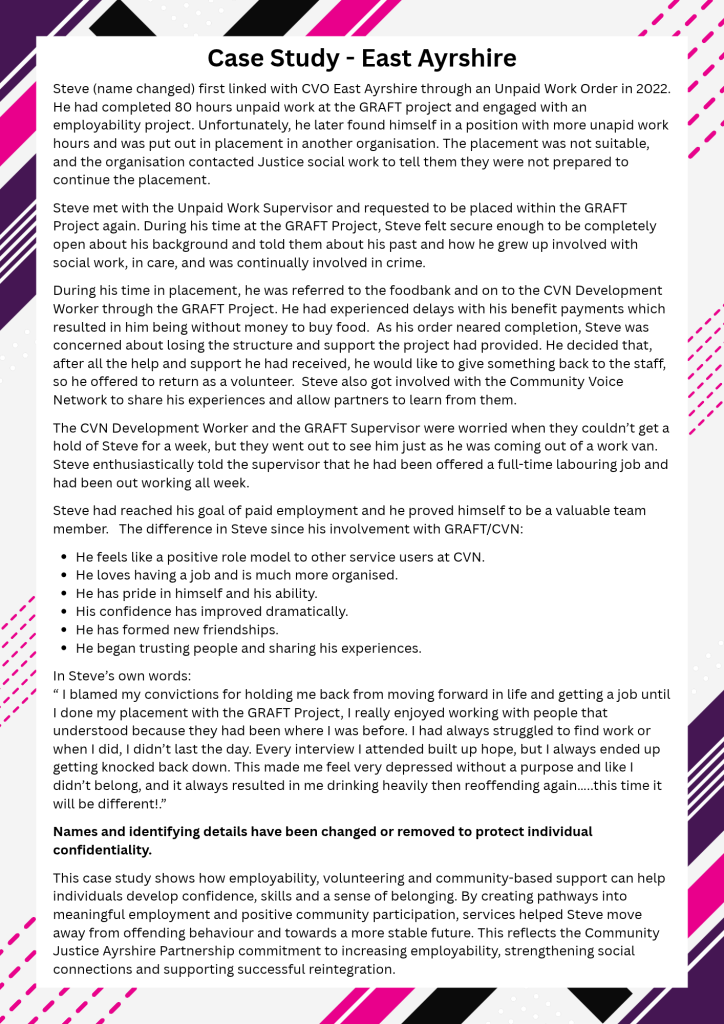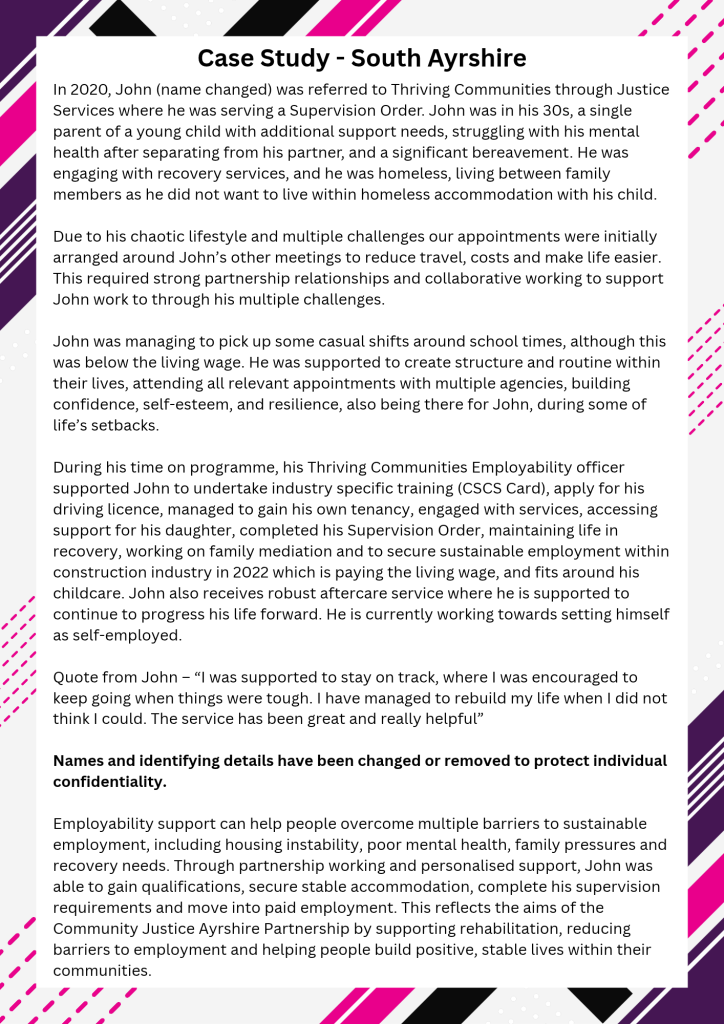

Supporting People into Education, Training, Volunteering and Employment
Employability is about having the skills, knowledge, experience and support needed to prepare for, find, and sustain employment.
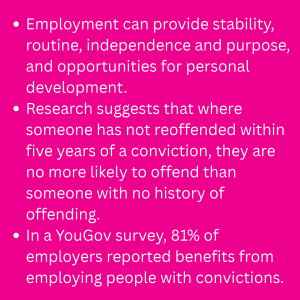
Within community justice, employability is recognised as an important factor in helping people move away from offending behaviour and build positive, meaningful lives. Access to education, training, volunteering and employment opportunities can improve wellbeing, financial stability, confidence and social connections, while supporting successful rehabilitation and reintegration.
The National Strategy for Community Justice identifies employability as a key priority and highlights the importance of improving access to these opportunities. The Community Justice Ayrshire Partnership (CJAP) Outcomes Improvement Plan recognises employability as an important contributor to reducing reoffending, supporting reintegration as well as improving outcomes for individuals, families and communities.
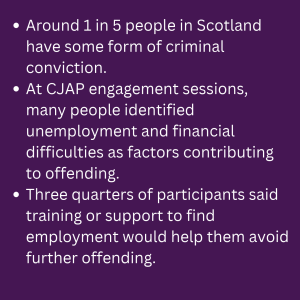
Many people involved in the justice system face barriers to employment, including poor physical or mental health, housing instability, substance use, financial difficulties, limited qualifications, low confidence, gaps in employment history and stigma associated with criminal convictions. CJAP partners work together to reduce these barriers and help people access the support they need by strengthening pathways into education, training, volunteering and employment.

Employability Across the Justice Journey
Skills, qualifications, confidence and work experience can be developed at many points throughout a person’s journey through the justice system.
In Custody
Many people engage in education, training and work opportunities whilst serving a custodial sentence. These opportunities can help individuals develop skills, gain qualifications, improve literacy, numeracy and digital skills, and gain accredited vocational training. This can help improve confidence, increase work readiness and prepare individuals for employment, training or further education on release.
CJAP have supported the delivery of Positive Pathways events within HMP Kilmarnock. These events bring together employers, training providers, volunteering organisations and employability services to speak directly with people preparing for release and help them explore future opportunities.
Community Sentences
Through Community Payback Orders, Unpaid Work and Other Activity requirements, individuals may have opportunities to develop practical skills, gain experience, build confidence and access training that supports future education or employment opportunities. Unpaid Work can act as a stepping stone towards further training, volunteering and employment where people can demonstrate reliability and commitment which will help future applications. Through Other Activity, access to additional training and personal development opportunities can also help.
We often share community payback newsletters on our Local News page where you can read about positive unpaid work projects.
Disclosure periods for community orders are generally shorter than prison sentences, which could be motivation for completing orders – an individual will be able to “wipe the slate clean” much sooner with a community sentence than a prison sentence.
Pre-Release Planning
Through the Community Reintegration model, partners work together to identify support needs before liberation and connect individuals to relevant services. Employability, education and training opportunities form an important part of this planning process. Further information about support on release from prison can be found on our Community Reintegration page.
In the Community
Following release from custody, or when a person is completing diversion from prosecution, or a community sentence, individuals can be linked in with education, training and employability support from a range of local and national partners.


Support Available Across Ayrshire
A wide range of organisations across Ayrshire provide support to help people develop skills, access education and training, secure employment and sustain positive outcomes. Through partnership working, we aim to strengthen the pathways into the right support for people at the right time, depending on what stage they are at.
To find additional services, and get contact information for the supports mentioned below please look at our directory (there is a section specifically for Education, Training and Employment Support).
Support may include:
- Careers information, advice and guidance.
- Education and training opportunities, like college courses.
- Skills development and qualifications, including literacy and numeracy, and digital skills.
- CV development and interview preparation.
- Volunteering and work experience opportunities, Volunteering can also provide valuable opportunities to build confidence, gain experience and develop workplace skills.
- Job searching and application support.
- Disclosure advice and guidance.
- Confidence building and mentoring.
- Financial inclusion and benefits advice.
- In-work support.
- Support for working in a specific sector, like Construction and CSCS training, Hospitality training, Health and social care qualifications, Vocational qualifications
- Employability programmes.
Supporting Inclusive Recruitment
Recruit With Conviction
The Community Justice Ayrshire Partnership previously worked with employers and partners across Ayrshire through the Recruit With Conviction programme to increase understanding of criminal convictions, reduce stigma and promote inclusive recruitment practices. The programme also supported organisations to review recruitment policies and procedures, helping ensure that convictions are considered fairly and proportionately.
The programme supported employers, recruiters and practitioners to develop knowledge and confidence around disclosure requirements and fair recruitment processes, helping ensure that people are assessed on their skills, experience and suitability for a role while appropriately considering any criminal convictions.
East, North and South Ayrshire Councils are all Recruit With Conviction Ambassador organisations. This means they have committed to promoting fair and proportionate recruitment practices and supporting employment opportunities for people with convictions, in their own organisation and publicise and promote these procedures with partner organisations, subcontractors and wider business or other networks.
Opportunities and Support for Employers
CJAP encourages fair and proportionate recruitment practices. Recruitment decisions should consider the relevance of any conviction to the role, the length of time since the offence, and the skills, experience and positive progress demonstrated by the individual. By offering opportunities to people who are ready to move forward with their lives, employers can make a meaningful contribution to rehabilitation, reintegration and community wellbeing.
Good practice may include:
- Understanding disclosure requirements and rehabilitation periods.
- Engaging with employability services and support organisations.
- Considering applications on a case-by-case basis.
- Assessing the relevance of any conviction to the role.
- Recognising evidence of rehabilitation and positive change.
- Ensuring recruitment policies are fair and proportionate.
- Supporting applicants to discuss convictions openly and honestly.
Employers have an important role to play in supporting rehabilitation, reducing barriers to employment and creating safer, more inclusive communities.
Why consider inclusive recruitment?
People with convictions often possess valuable skills, qualifications, experience and motivation but may face challenges accessing employment opportunities due to stigma or concerns about previous convictions.
Employers who take an inclusive approach can benefit from:
- Access to a wider pool of talent.
- Increased workforce diversity.
- Improved staff retention and loyalty.
- Positive social impact.
- Demonstrating corporate and community responsibility.
A YouGov survey found that 81% of employers believed employing people with convictions had benefited their organisation.
Positive Pathways
CJAP has hosted Positive Pathways events within HMP Kilmarnock, bringing together employers, training providers, volunteering organisations and employability services to engage directly with people preparing for release. Over 160 men in HMPK engaged with employers and support services through two events in 2025.
These events provide opportunities to:
- Promote employment opportunities.
- Raise awareness of career pathways.
- Discuss training and skills requirements.
- Support informed career planning.
- Build connections with potential future employees.

Employer Training and Support
Working with partners, CJAP has supported the delivery of training and awareness sessions for employers and practitioners across Ayrshire.
Topics have included:
- Disclosure of criminal convictions
- Changes to disclosure legislation
- Fair and proportionate recruitment
- Supporting applicants with convictions
- Challenging stigma and misconceptions
Local employers and volunteer organisations took part in training delivered by Apex Scotland in 2025-2026. This training was very well received with 98% of those surveyed saying the sessions made them more confident / aware of issues those with justice involvement may have when seeking work or opportunities.
Ways to Get Involved
Employers can support community justice by:
- Reviewing recruitment policies and practices.
- Considering applicants on a case-by-case basis.
- Offering work experience or volunteering opportunities.
- Connecting with employability services.
- Attending employer awareness and disclosure training.
- Participating in Positive Pathways events.
- Sharing examples of good practice.
If your organisation would like to learn more about inclusive recruitment, disclosure training, Positive Pathways events or other opportunities to get involved, please get in touch.